
Recent studies reveal that 1 in 100 newborns experiences some form of hip dysplasia, with improper baby carrying methods potentially increasing this risk significantly. The first months of life represent a critical period for hip joint development, yet many parents unknowingly use carriers that may compromise their baby’s hip health. While baby newborn carriers offer invaluable hands-free convenience and precious bonding opportunities, the wrong positioning can stress developing hip joints, potentially leading to developmental issues that may require surgical intervention. As the market floods with various carrier options, parents face a crucial challenge: determining which ones truly support proper hip development. This guide aims to empower you with evidence-based knowledge to protect your newborn’s hip health, helping you navigate carrier choices and proper usage techniques. Understanding proper hip positioning isn’t just about comfort—it’s about safeguarding your baby’s long-term mobility and development.
Why Hip Safety Matters: Understanding Newborn Development
Hip dysplasia, or Developmental Dysplasia of the Hip (DDH), occurs when a baby’s hip joint fails to form properly, potentially leading to lifelong mobility issues. Newborns are particularly vulnerable because their hip joints are primarily cartilage and naturally loose, allowing for normal growth and development. During the first few months of life, these joints gradually harden into bone while the socket deepens to create a stable hip structure. However, this critical development period is precisely when improper positioning can interfere with natural hip formation. Research from the International Hip Dysplasia Institute demonstrates that forcing babies’ legs to straighten against their natural fetal position stresses the hip joints, potentially pushing the ball of the joint out of its developing socket. A healthy hip position maintains the natural spread-squat position, where the thighs are supported and the hips can freely rotate in their sockets. In contrast, carriers that dangle legs straight down or compress them together create abnormal forces that may reshape the softened joint structures, potentially requiring extensive medical intervention to correct.
Ergonomic Baby Carrier Essentials: Anatomy of Safe Support
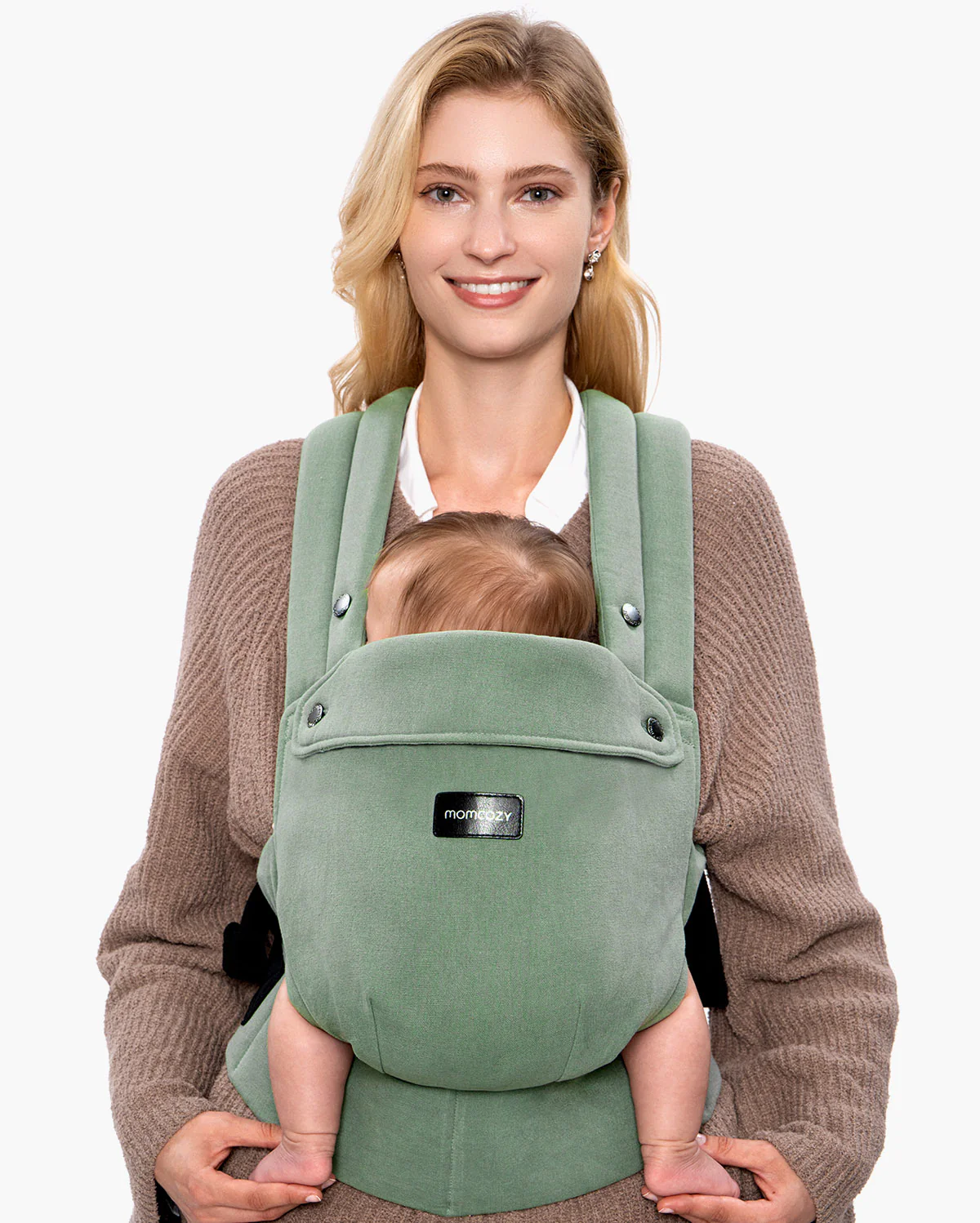
A truly ergonomic baby carrier supports your newborn’s natural posture while evenly distributing weight to prevent hip strain. The cornerstone of safe carrying is achieving the “M-position,” where your baby’s knees rest higher than their bottom, creating a natural spread-squat position. This alignment maintains the hip joints’ optimal development by keeping the thigh bones centered in their sockets. Leading brands like momcozy have designed their carriers specifically to support this critical M-position, ensuring the carrier base supports your baby from knee to knee, allowing the legs to spread naturally without forcing them wider than comfortable. Proper spine alignment follows a gentle C-curve, supporting your newborn’s developing vertebrae without forcing an unnaturally straight posture.
Critical Features Checklist
The carrier base must measure at least 6-8 inches wide to properly support your newborn’s thighs and prevent leg dangling. Look for adjustable seat width features that grow with your baby, ensuring continued hip support as they develop. The carrier should include a structured headrest that stabilizes your newborn’s neck while allowing natural head movement. For newborns under 4 months, integrated infant inserts are essential, creating a smaller seat area that maintains proper hip positioning while supporting the entire spine. These inserts should raise your baby high enough to monitor breathing and prevent chin-to-chest compression.
Step-by-Step: Ensuring Hip-Safe Positioning
Achieving proper hip positioning begins with careful carrier preparation. Start by loosening all straps and expanding the seat base to its widest setting. Before placing your baby in the carrier, create a deep pouch that will support their bottom and thighs. When positioning your newborn, ensure their weight rests on their bottom with thighs fully supported from knee to knee. Their legs should spread naturally into an M-shape, with knees slightly higher than their bottom and thighs angled approximately 90-110 degrees from their body.
Newborn-Specific Safety Protocol
For newborns under four months, proper insert placement is crucial. Position the insert so it creates a raised platform, elevating your baby’s body to a height where you can easily kiss their forehead. This ensures proper breathing space and prevents their chin from tucking into their chest. Monitor the hip angle by checking that their legs form a natural frog-leg position without being forced wider. A properly positioned newborn should maintain symmetrical leg placement, with equal weight distribution on both sides. The carrier should never allow your baby’s legs to dangle straight down, as this creates harmful pressure on developing hip joints. Regular position checks are essential – look for signs of discomfort such as leg straightening or crying when placed in specific positions. For optimal weight distribution, adjust the waist belt to sit high and snug just below your rib cage, keeping your baby’s center of gravity close to your body. Remember that newborns should never exceed the carrier’s weight minimum, typically starting at 7-8 pounds, and should demonstrate adequate head and neck control before extended carrier use.
Outward-Facing Baby Carrier Risks: What Science Shows
Scientific research indicates that outward-facing carrier positions create unique challenges for newborn hip development. When babies face outward, their legs typically dangle straight down without proper thigh support, placing excessive strain on developing hip joints. Studies from pediatric orthopedists demonstrate that this position can create up to three times more pressure on the hip socket compared to inward-facing carries. Additionally, the forward-facing position forces an unnatural straightening of the spine, potentially compromising both spinal and hip development. Medical consensus suggests avoiding outward-facing positions entirely until babies reach at least 4-6 months of age, demonstrate strong head control, and weigh a minimum of 14 pounds. Even then, limiting outward-facing time to 10-15 minutes prevents overtaxing developing joints. For newborns under 4 months, inward-facing carries provide essential physiological benefits: they maintain natural spine curvature, support proper hip socket formation, and offer vital emotional security through face-to-face connection with caregivers.
Selecting Certified Hip-Safe Carriers: Expert Guidelines
The International Hip Dysplasia Institute (IHDI) certification represents the gold standard for hip-healthy carrier design, backed by rigorous medical research and testing protocols. When evaluating carriers, look for the official IHDI acknowledgment seal, which guarantees the product maintains optimal hip positioning throughout all carrying positions. These certified carriers undergo extensive biomechanical testing to verify consistent support of the M-position across weight ranges and age groups. Beyond certification, examine the manufacturer’s testing documentation for specific joint pressure studies and developmental impact assessments. Warning signs in product descriptions include terms like “crotch dangling,” “narrow-based seat,” or suggestions that straight-leg positioning is acceptable for newborns. Quality hip-safe carriers will emphasize features like adjustable seat depth, structured knee-to-knee support, and detailed age-appropriate positioning guidelines. While premium brands often highlight their ergonomic design, some budget-friendly options also meet IHDI standards – focus on the certification rather than brand prestige. When reviewing product specifications, ensure the carrier explicitly states its compatibility with newborn anatomy and includes detailed instructions for achieving proper hip alignment at each developmental stage.
Safe Babywearing: A Foundation for Healthy Development
Protecting your newborn’s hip development through proper carrier use represents a crucial aspect of early parenting that can prevent lifelong mobility issues. The key principles of hip-healthy babywearing – maintaining the M-position, ensuring knee-to-knee support, and respecting age-appropriate positioning – create a foundation for healthy joint development. Take time to evaluate your current carrier against the ergonomic standards discussed, particularly checking for IHDI certification and proper newborn support features. If you have concerns about your baby’s hip positioning or your carrier’s design, don’t hesitate to consult a pediatric orthopedist for personalized guidance. Remember that safe babywearing not only protects your child’s physical development but also creates invaluable opportunities for bonding, emotional connection, and convenient hands-free parenting. By choosing hip-safe carriers and consistently implementing proper positioning techniques, you’re investing in your baby’s long-term well-being while enjoying the countless benefits of close physical connection during these precious early months.