Choosing an engagement ring is one of the few jewellery decisions most people make without any real prior experience. Unlike buying a necklace or a pair of earrings, where you can try dozens of options over the years and learn what works for you, an engagement ring is typically a first. The stakes are high and the reference points are limited.
The result is that most buyers default to what they have seen most often, the round brilliant solitaire, or to whatever is trending on social media at the moment. Neither is a bad starting point, but neither is the same as choosing what genuinely suits the person who will wear the ring every day for the rest of their life.
The questions worth asking before looking at any specific ring are simpler than most jewellery guides suggest.
What does the wearer’s existing jewellery tell you?
The most reliable indicator of what someone will love in an engagement ring is what they already choose to wear. Jewellery preferences are consistent. Someone who gravitates toward fine, delicate pieces with minimal detail will almost certainly feel overwhelmed by a large, heavily decorated ring, even if they admire it on someone else. Someone who wears bold, statement pieces and reaches for maximalist accessories will likely feel underwhelmed by something too understated.
Look at the metal tones they wear most consistently. Gold-toned jewellery suggests yellow or rose gold will feel natural. Silver-toned jewellery suggests white gold or platinum. Mixing metals confidently suggests they are open to either.
Look at the scale of what they wear. Fine chains and small earrings indicate a preference for delicate proportions. Chunky rings and large pendants suggest they are comfortable with presence and statement.
This is not a rule. It is a starting point that saves you from choosing something beautiful that simply does not match how the person actually expresses themselves through what they wear.
How hand shape affects what works
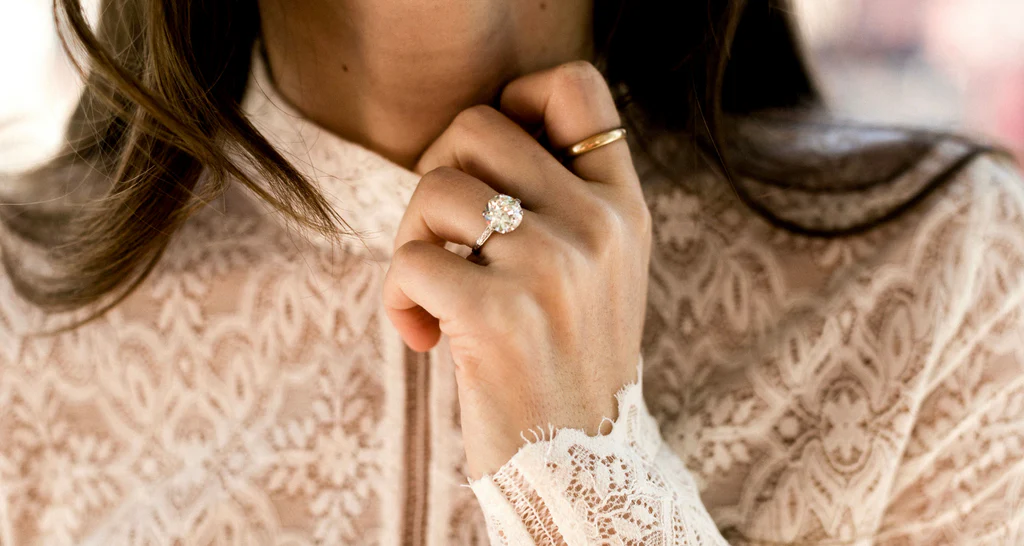
Hand shape and finger length have a genuine effect on how different ring styles appear in wear. This is not about aesthetics as a fixed rule. It is about proportion, and proportion is what makes a ring look like it belongs on a specific hand rather than looking like a ring that happens to be there.
Elongated finger shapes tend to work well with most ring styles, including round and square cuts that might appear to shorten a shorter finger. Rounder or shorter finger shapes often benefit from elongating diamond shapes like oval, marquise, or pear, which create a visual lengthening effect.
Wider bands can suit wider fingers comfortably but can overwhelm narrower fingers where a thinner band allows the stone to remain the focus.
The honest truth is that these are tendencies rather than rules. The best way to understand what works is to try different styles in person and pay attention to what actually looks and feels right rather than what the guidelines suggest should look right.
The shape question and what it actually means
Diamond shape is the most visible characteristic of an engagement ring and the most personal. Unlike the technical grades that describe a diamond’s quality, shape is entirely about what the wearer finds beautiful and what suits their style.
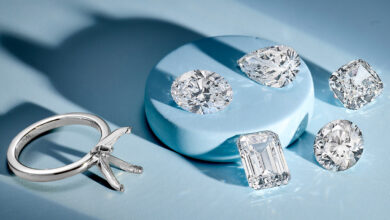
Round brilliant diamonds produce the most light return and sparkle of any shape. They have been consistently popular for decades because they work across all ring styles and suit most hand shapes. They are also typically the most expensive shape per carat because more of the rough diamond is lost in the cutting process.
Oval diamonds have become increasingly popular for good reasons. They face up larger than a round brilliant of the same carat weight, meaning they appear bigger than they are. Their elongated shape creates a flattering lengthening effect on the finger. They produce a similar brilliance to round diamonds.
Cushion cuts have a softer, slightly vintage quality. Their rounded corners and pillow-like shape produce a deep, glowing light pattern rather than the intense sparkle of a brilliant cut. They suit buyers drawn to romantic or antique aesthetics and pair beautifully with rose gold.
Emerald and Asscher cuts are step cuts, which means they produce long mirror-like flashes of light rather than scattered sparkle. They have an architectural, elegant quality that suits confident, understated personal styles. They show inclusions more readily than brilliant cuts, which means stone selection matters more for these shapes.
Pear and marquise shapes are distinctive and require a certain confidence to carry. On the right hand with the right wearer they are striking. On someone who finds them difficult to wear, they become a source of daily ambivalence.
What bespoke actually offers that off-the-shelf cannot
Most engagement rings bought from retail environments, online or in physical stores, are designed to look good on a display or in a photograph. They are built to appeal to the broadest possible range of buyers rather than to suit any specific person precisely.
Bespoke is different not because it is more expensive or more complicated, though it can be both, but because it starts from a different place. A bespoke engagement ring begins with the person who will wear it. Their style, their hand, their life, what matters to them and what does not. The ring that results from that process is a different object from one chosen off a shelf, because it was made for someone specific rather than for anyone in general.
For buyers considering diamond engagement rings in Hatton Garden, working with a specialist like Regal means the process begins with a conversation about the wearer rather than with a display case. With access to an extensive sourced diamond inventory and all manufacturing completed in their Hatton Garden workshop, the finished piece is built around the brief rather than around existing stock. The result is a ring that looks like it could only belong to the person wearing it, which is the point of a piece that will be worn every day for a lifetime.
If you are looking at diamond engagement rings in Hatton Garden, starting with those questions about style, hand shape, and what the wearer already loves will take you considerably further than starting with a carat weight target or a certification grade.
The detail most buyers overlook until it is too late
The ring needs to work alongside a wedding band. This is the practical consideration that catches many buyers by surprise, particularly those who choose a highly contoured or irregularly shaped engagement ring without thinking about whether a straight wedding band will sit against it cleanly.
If the engagement ring has a curved or raised profile, the wedding band will either need to be custom fitted to nest against it or will sit with a visible gap. Neither is a problem if it is anticipated. It becomes a problem if it is discovered after both rings have been purchased and the fit is awkward.
The simplest solution is to discuss the wedding band alongside the engagement ring from the beginning, even if it will not be purchased until the wedding. A jeweller who raises this question during the consultation is thinking about the long-term result rather than just the immediate sale.