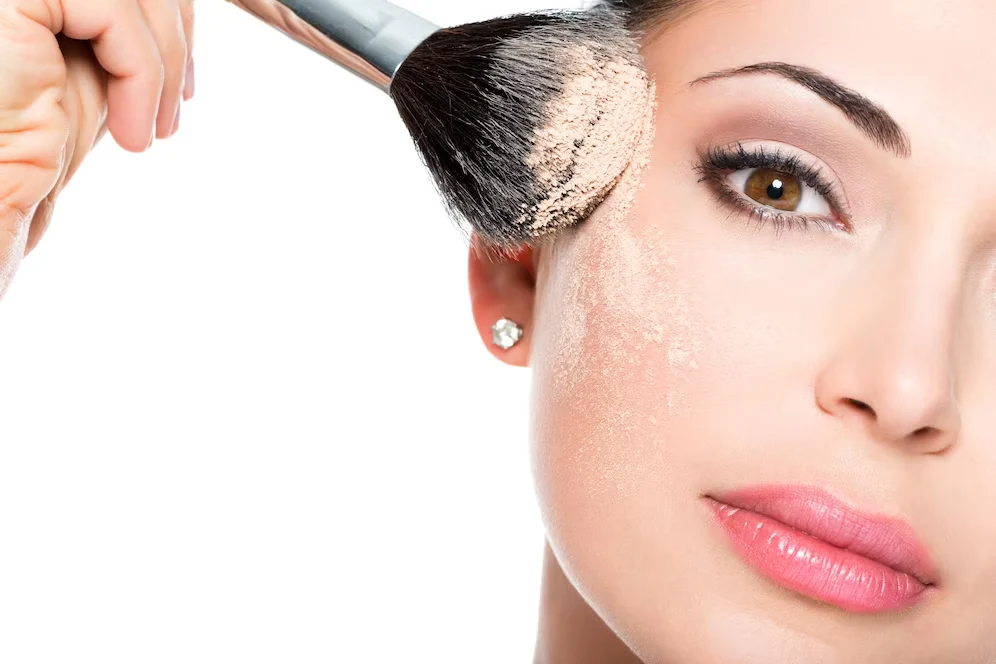
Powder foundation and face powder are frequently mistaken as the same product, even though they serve different purposes. Understanding how each one works is key to deciding which controls oil more effectively for your oily skin type and routine. This guide breaks down the basics of powder foundation and face powder, benefits, and more so that you can use it strategically for a flawless, grease-free finish. Stay tuned!
Understanding Powder Foundation
Powder foundation is a pigmented makeup product that replaces cream or liquid foundation. It is formulated to provide coverage while absorbing excess oil at the same time. Because it sits directly on bare or primed skin, powder foundation helps control oil from the base level.
Most powder foundations contain oil-absorbing ingredients such as talc, silica, or mica, which reduce shine as the skin produces oil throughout the day. Since there is no liquid layer underneath, there is less chance of oil mixing with emollient textures. This makes powder foundation a practical option for people with oily skin who prefer a matte or semi-matte finish. That said, oil control varies depending on formulation, skin prep, and environmental conditions such as heat and humidity.
Understanding Face Powder
Face powder, often called setting powder or compact powder, is designed primarily to set makeup and reduce surface shine. It usually contains little to no pigment and is applied after foundation or concealer. Its role is to lock base products in place and absorb oil that appears on the skin’s surface.
Face powder works well for blotting excess shine during the day and softening the appearance of pores. However, because it sits on top of other products, it does not prevent oil from forming underneath makeup layers. Its oil-control effect is generally temporary and may require reapplication.
Comparing Oil Control Performance
From an oil-control perspective, neither product is universally ‘better’; they simply address oil at different stages of makeup application.
- Powder foundation manages oil during the base application stage, making it effective for those who want both coverage and shine control in one step. Face powder manages oil after makeup is applied, making it better suited for setting makeup or quick touch-ups.
- Powder foundation may feel lighter for some users because it eliminates the need for liquid foundation, while face powder offers more flexibility for those who prefer layered makeup.
Choosing What Works For You
Powder foundation may be suitable if you:
- Have oily or combination skin
- Prefer fewer makeup layers
- Want coverage with oil control
Face powder may be suitable if you:
- Use liquid or cream foundation
- Need on-the-go shine reduction
- Want to set makeup without adding coverage
When it comes to managing oily skin, powder-based makeup products are often the first choice. Powder foundation provides more consistent oil control as a base product, while face powder excels at managing shine throughout the day. Choose the right option that aligns with your skin’s oil levels, coverage needs, and daily makeup routine. Remember, makeup for oily skin is less about layering products and more about strategic product selection and application.

